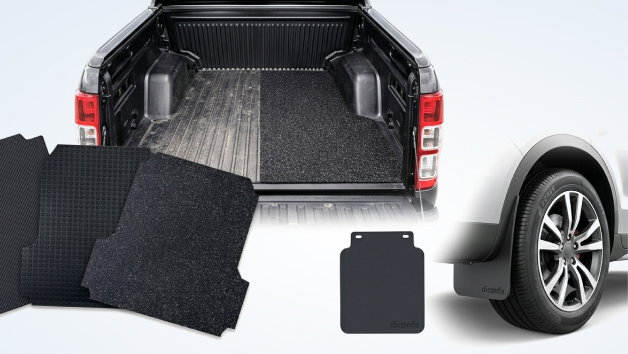
Gummimatten nach Maß
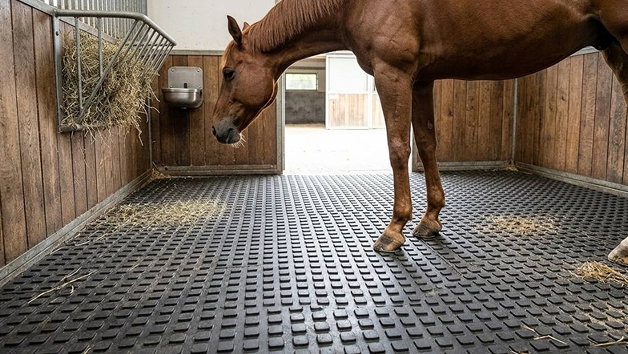
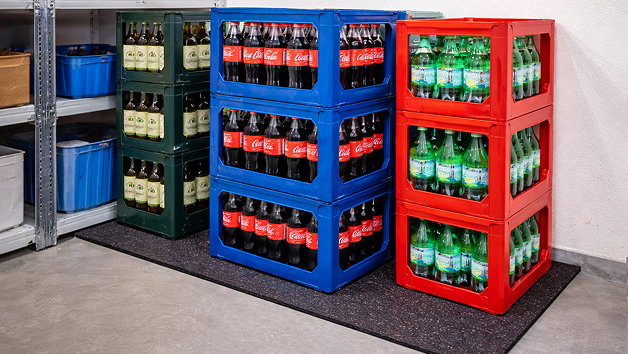
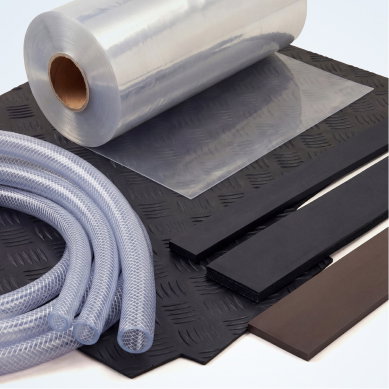
Ob im Auto, in der Werkstatt, im Gewerbe oder zu Hause – unsere maßgefertigten Gummimatten passen sich exakt Ihren Anforderungen an.
Rutschfest, strapazierfähig und wetterfest – ideal für Böden, Ladeflächen, Eingangsbereiche und vieles mehr.

Secure payment methods

Fast delivery time

Order directly from stock

purchase on invoice
Rubber Mats to Reduce Slip Risk in Wet Conditions
Wet floor surfaces are not only caused by heavy rain. Permanently damp areas, splash water, moisture carried indoors or wet autumn leaves can also reduce footing safety on smooth surfaces. House entrances, company entrances, transitions between indoor and outdoor areas, stairs and heavily used walkways are often particularly affected.
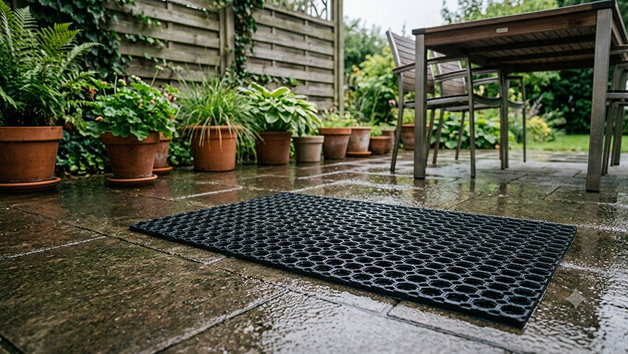
A suitable slip-resistant mat provides an additional structured walking surface. Which version is appropriate depends, among other things, on how much water is present, whether the area is covered and how heavily it is used. Where larger amounts of water occur, open or water-permeable mat structures can be particularly practical.
Slip-Resistant Mats for Entrances and Wet Walkways
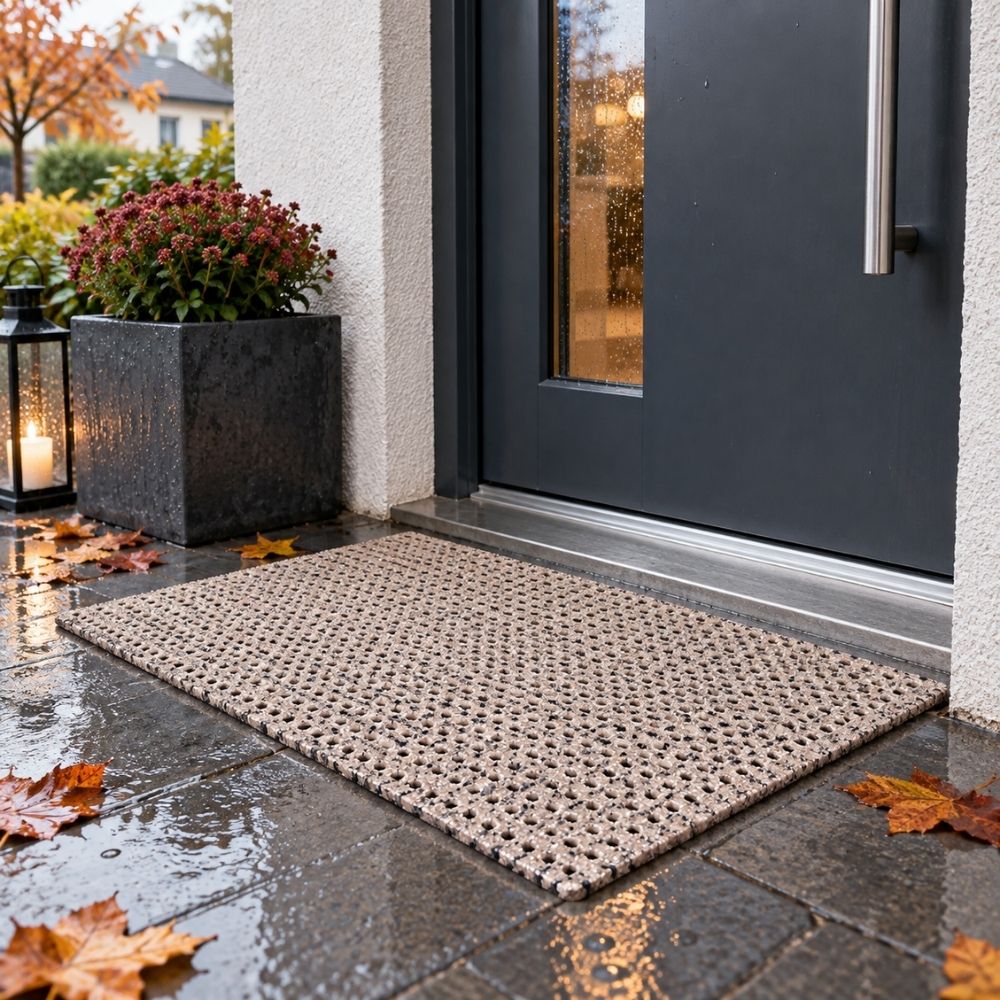
Especially in autumn, damp entrances and access routes are typical areas with an increased risk of slipping. Rainwater is carried in on shoes, leaves remain on the ground and dry and wet sections often alternate directly with one another. A suitable floor mat can create a clearly defined and grippy walking surface in these areas.
Depending on the type of mat, moisture and dirt can either be absorbed from the soles of shoes or drained downward through an open structure. For house entrances, commercial access points and transitions from outdoors to indoors, the mat should also lie securely and match the available dimensions.
Rubber Mats for Commercial Areas, Workshops and Outdoor Use
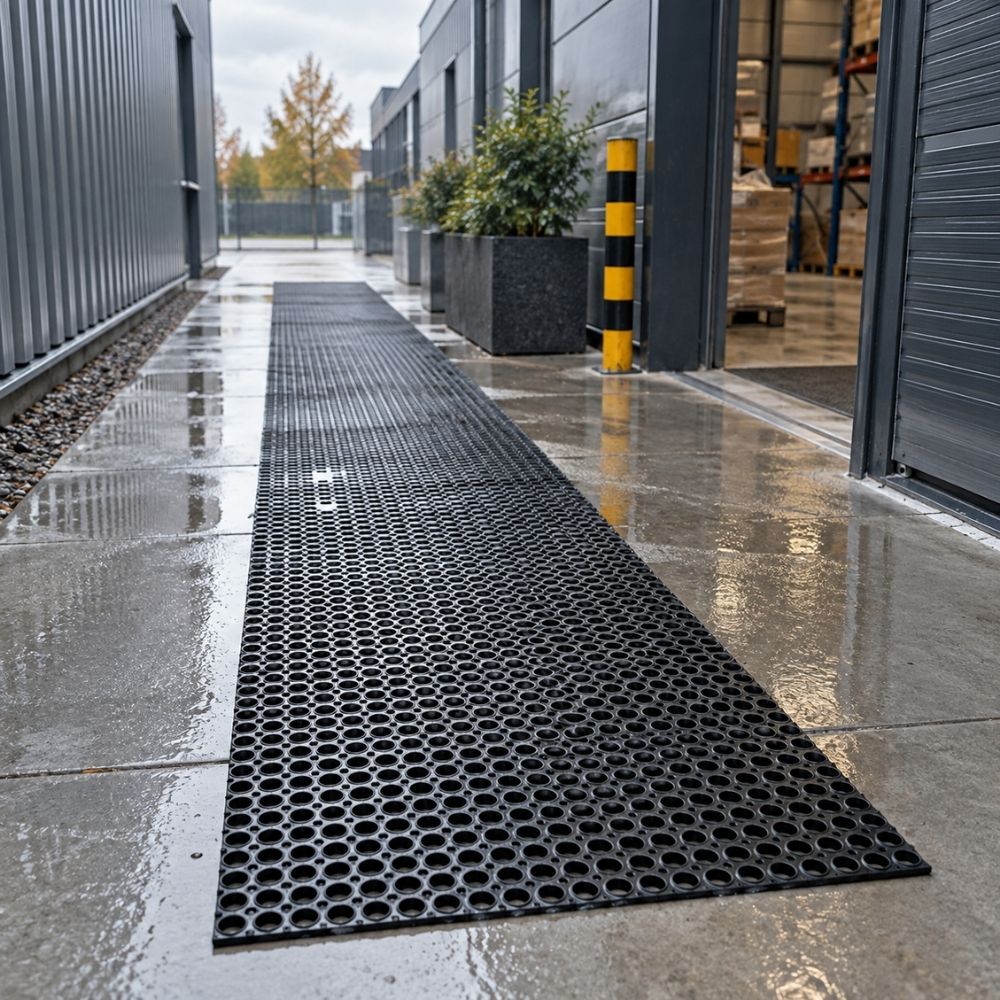
Wet conditions can also regularly become an issue at commercial sites. Business entrances, workshops, warehouse access points, covered outdoor areas or walkways between different parts of a building are often heavily used in rainy weather. Slip-resistant mats can be placed specifically on walking and standing areas where additional grip is required.
For more heavily used areas, the mat should be selected to suit the intended use. In addition to the surface structure, load capacity, material, substrate and, where applicable, the possibility of securing the mat also play a role. Product properties such as slip resistance or weather resistance should always be checked based on the respective mat design.
Which Mats Are Suitable for Rain and Moisture?
Different mat solutions are available for wet areas. Which one is most suitable depends primarily on the amount of water, the application area and the desired surface structure.
Ring Rubber Mats for Water Drainage and Heavily Used Areas
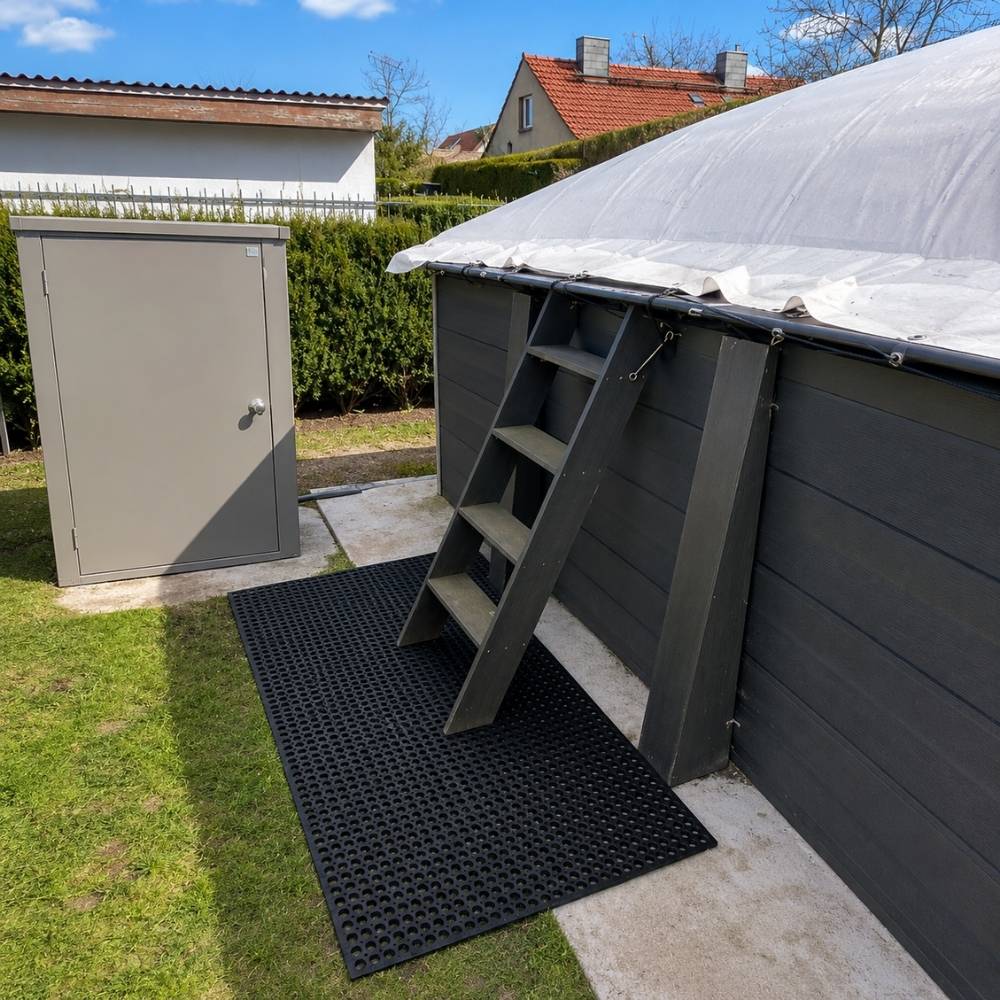
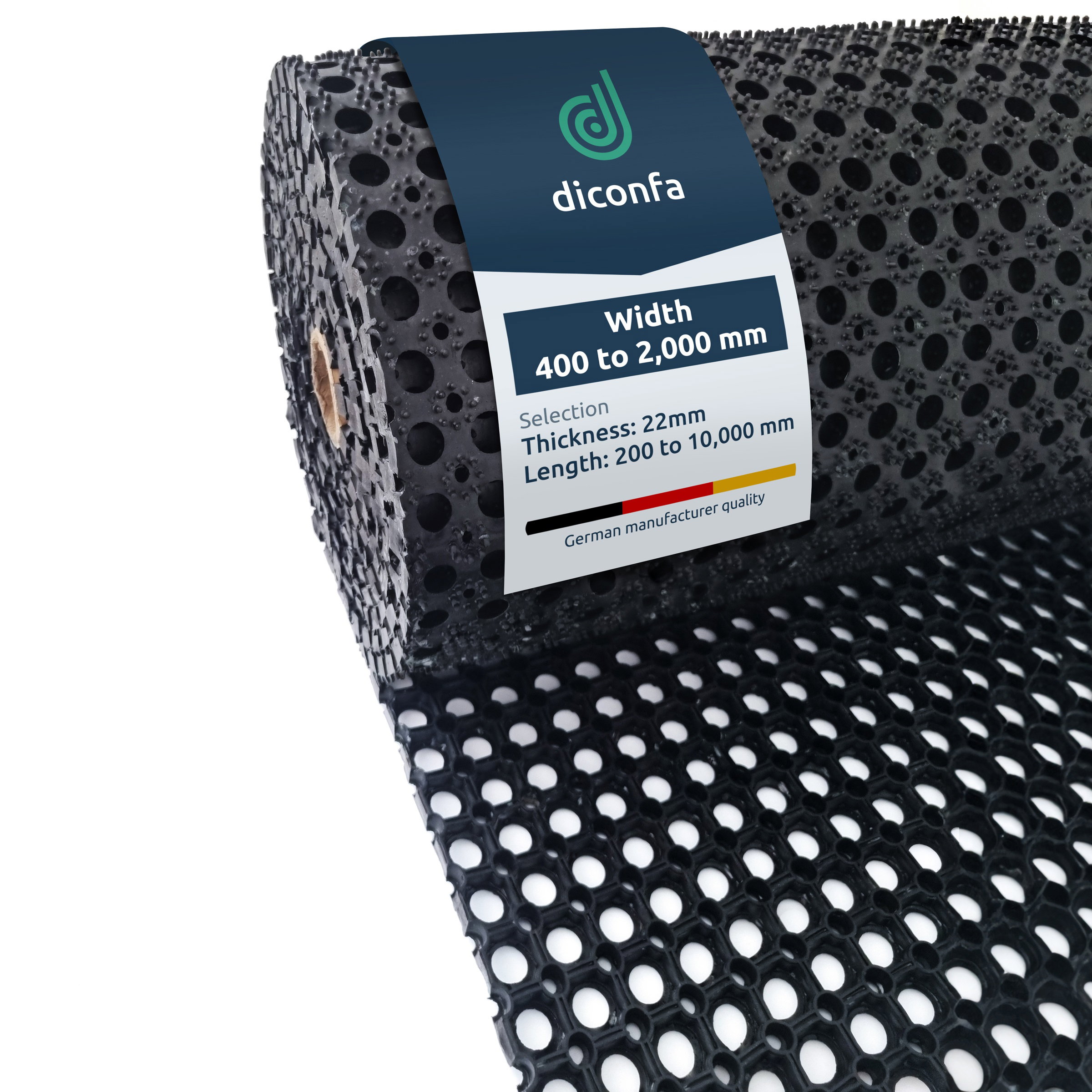
Ring rubber mats have an open ring or perforated structure. This allows water, dirt and other residues to pass through the mat to the surface below. The current diconfa ring rubber mat is specifically designed for wet indoor and outdoor areas and is suitable, among other things, for entrances, workplaces and other heavily used surfaces.
An open mat is particularly useful when the substrate beneath the mat also allows sufficient water drainage. Otherwise, moisture may collect underneath the mat.
Safety Mats for Areas with Increased Slip Risk
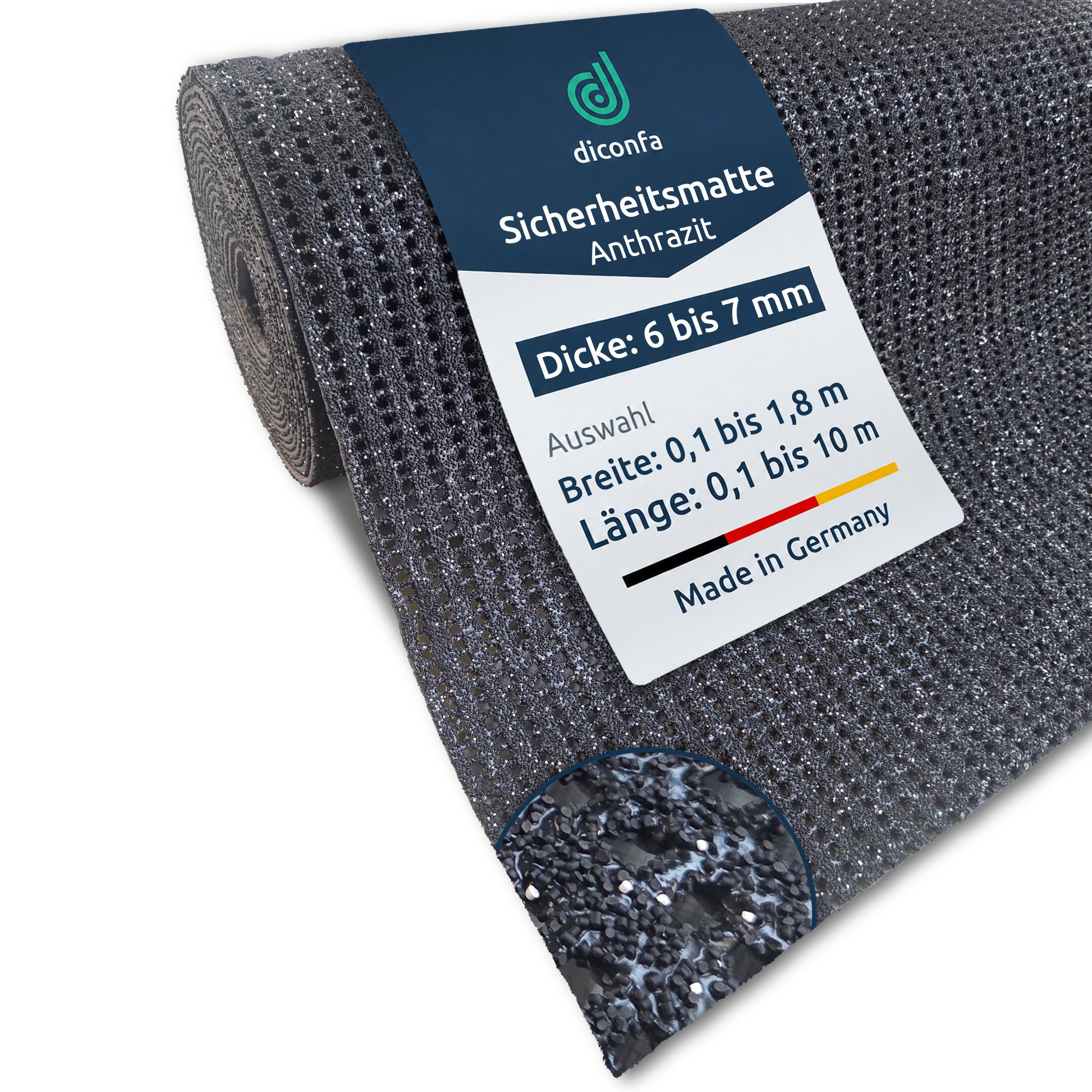
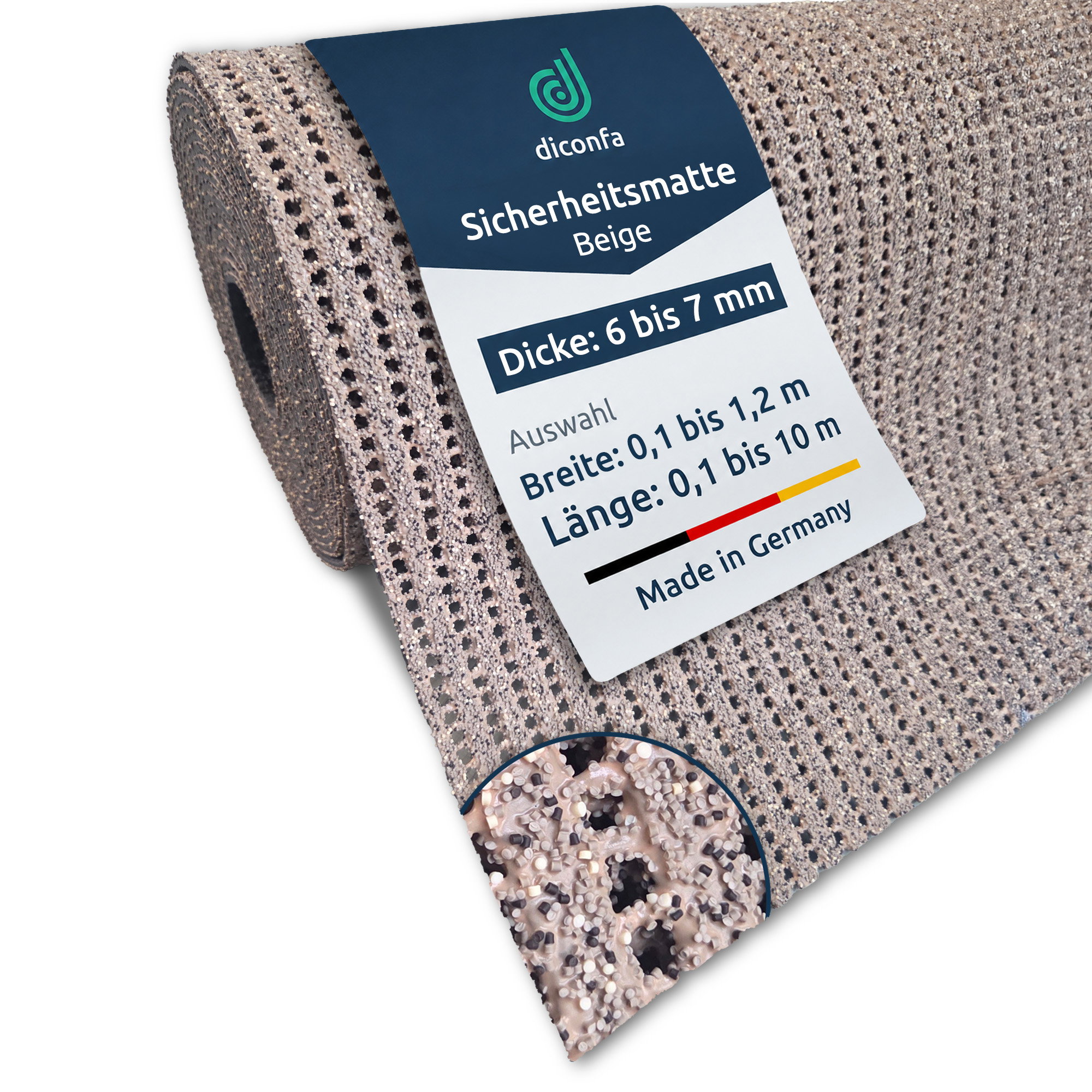
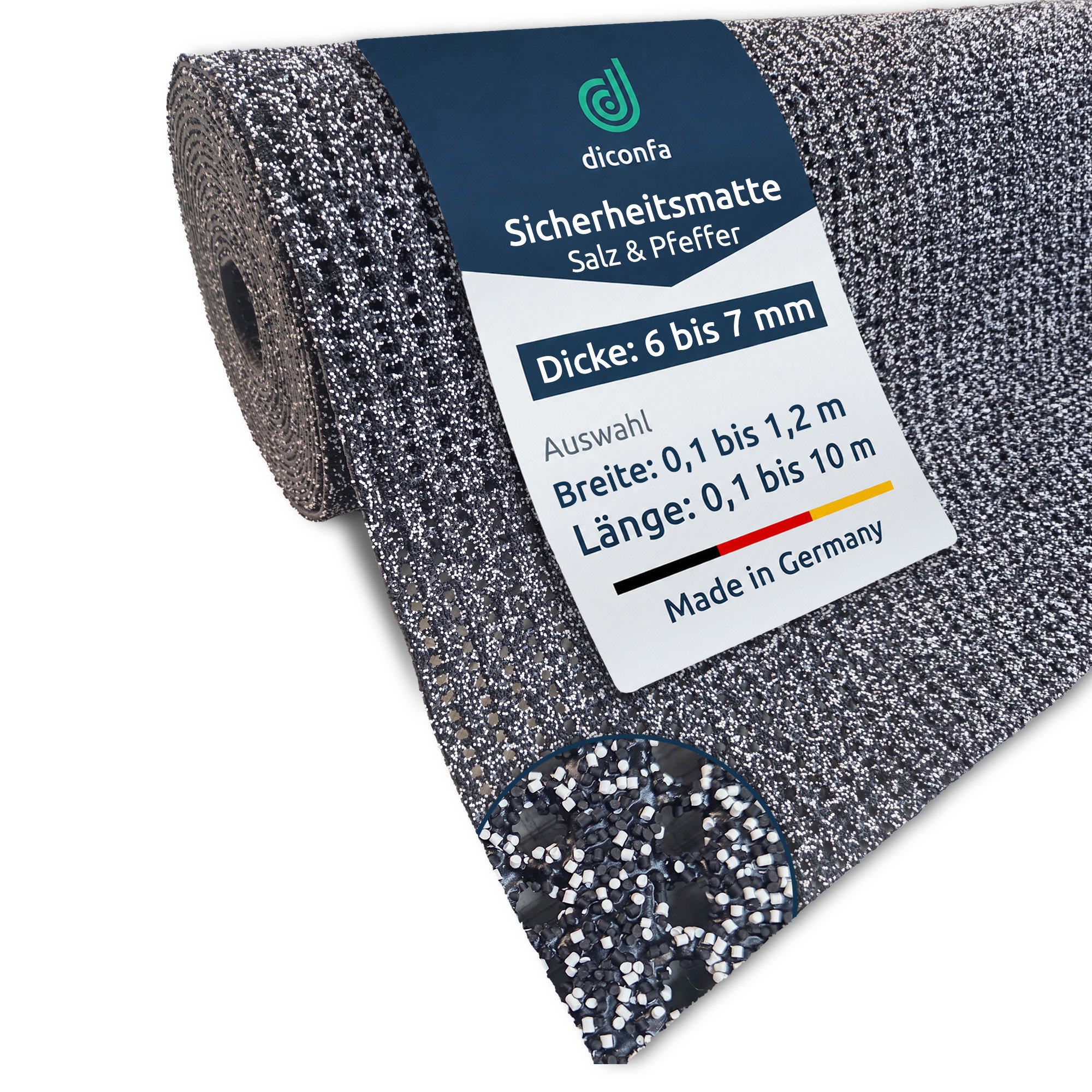
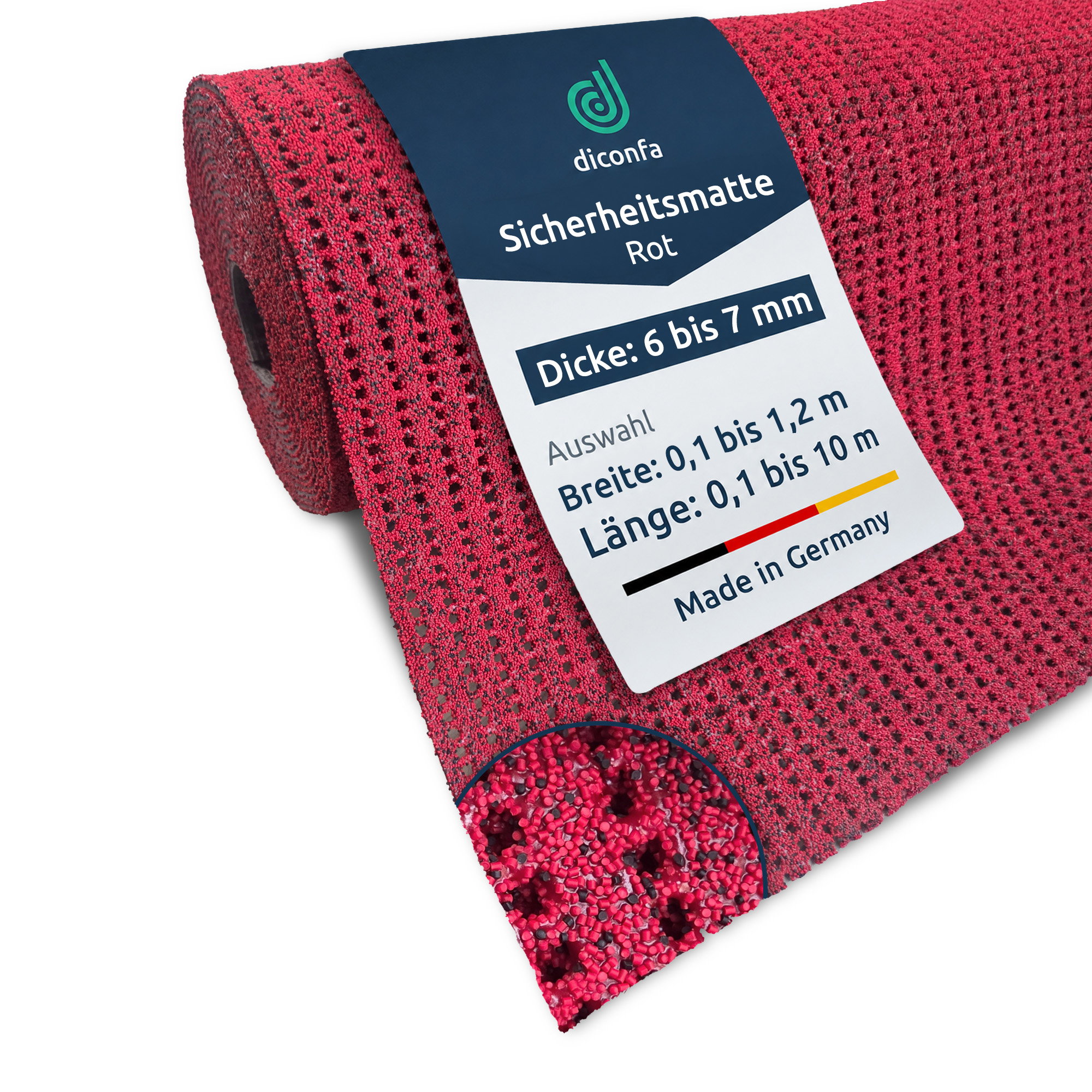
The safety mats from diconfa are specifically designed for areas where moisture and other influences can reduce footing safety. The grippy PVC granulate surface of the currently available versions achieves slip resistance class R13.
The mats have a water-permeable structure and are intended for indoor and outdoor use. This makes them suitable, for example, for entrances, walkways, terraces, balconies, stairs and company premises. The specific technical properties can be found directly on the respective product page.
Profiled Anti-Slip Mats
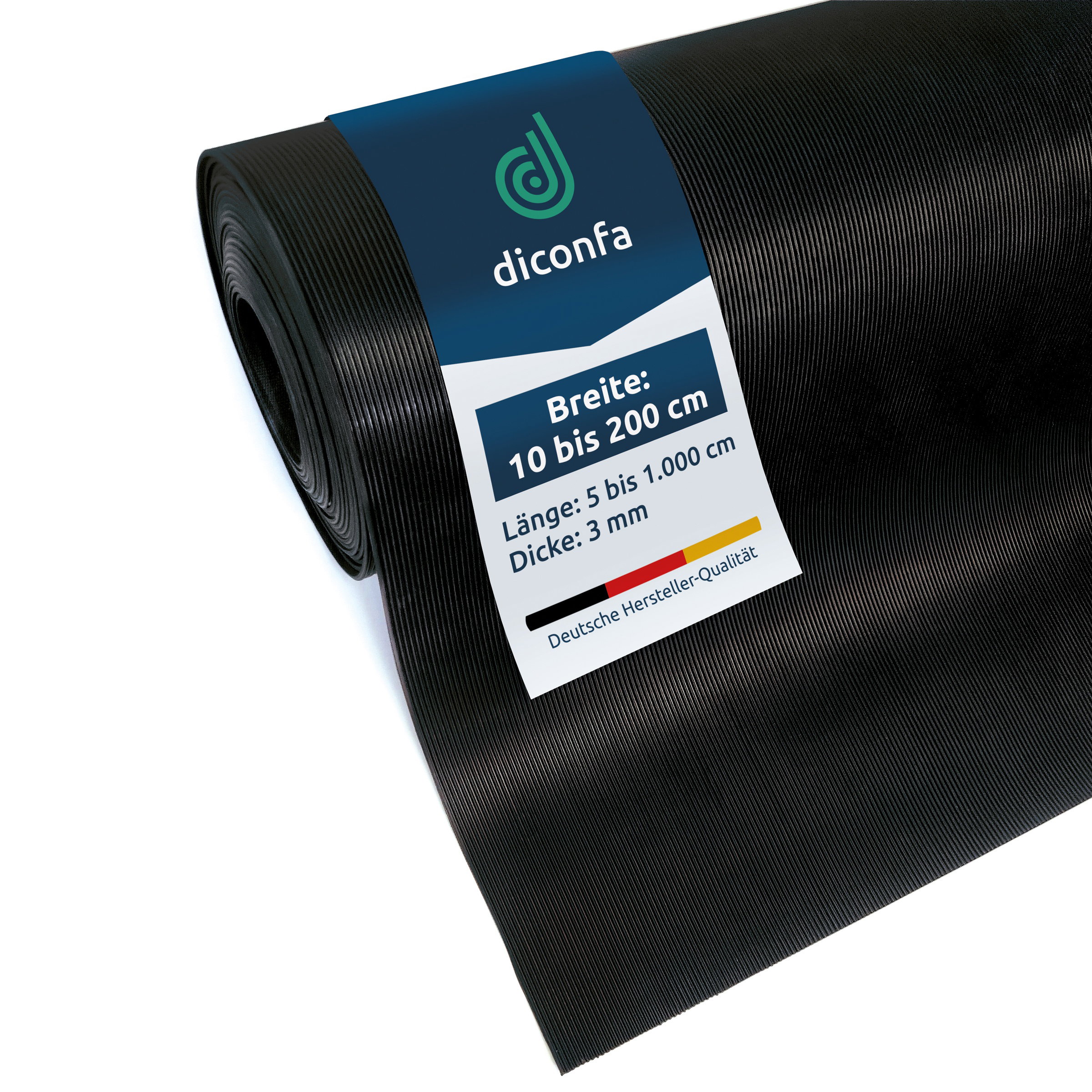
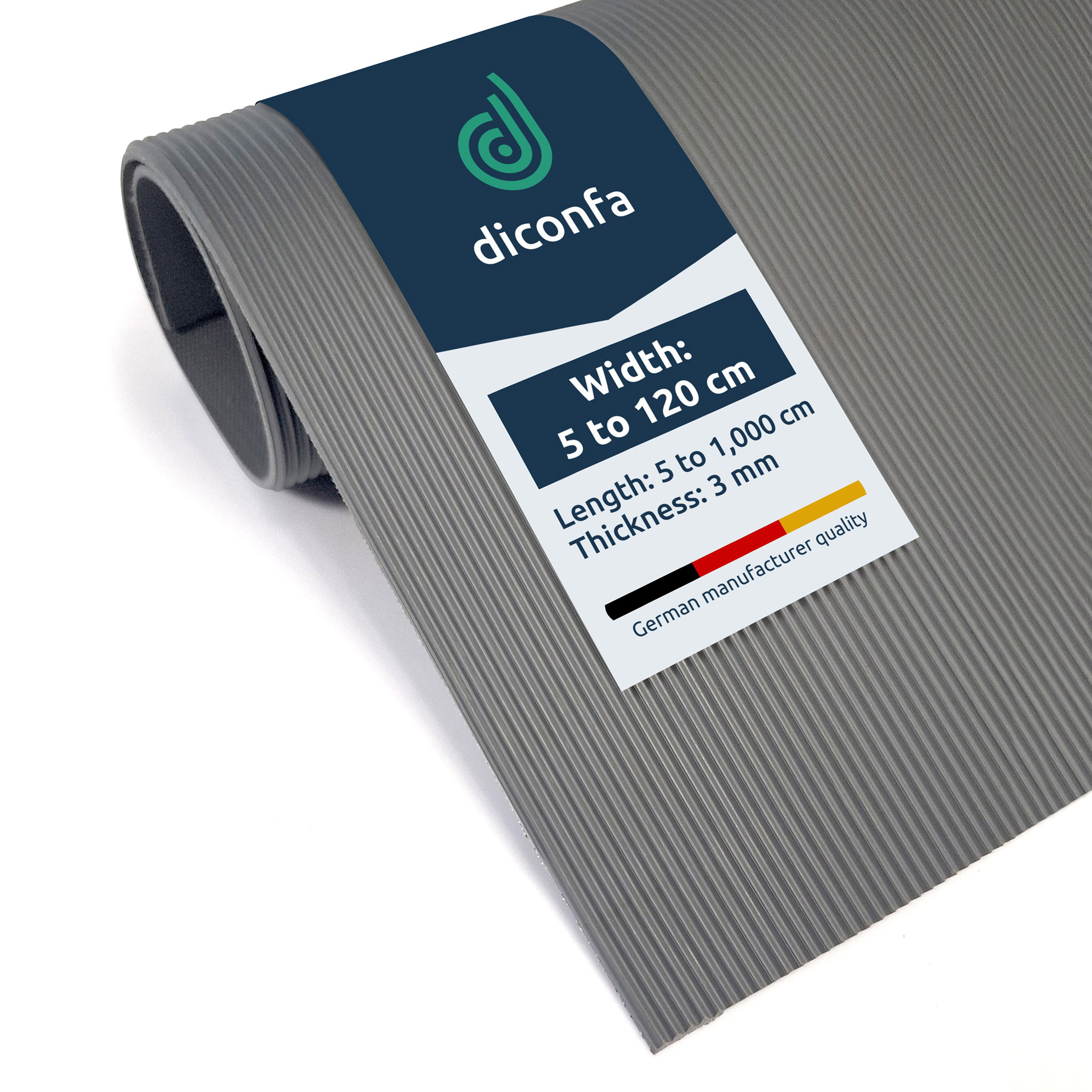
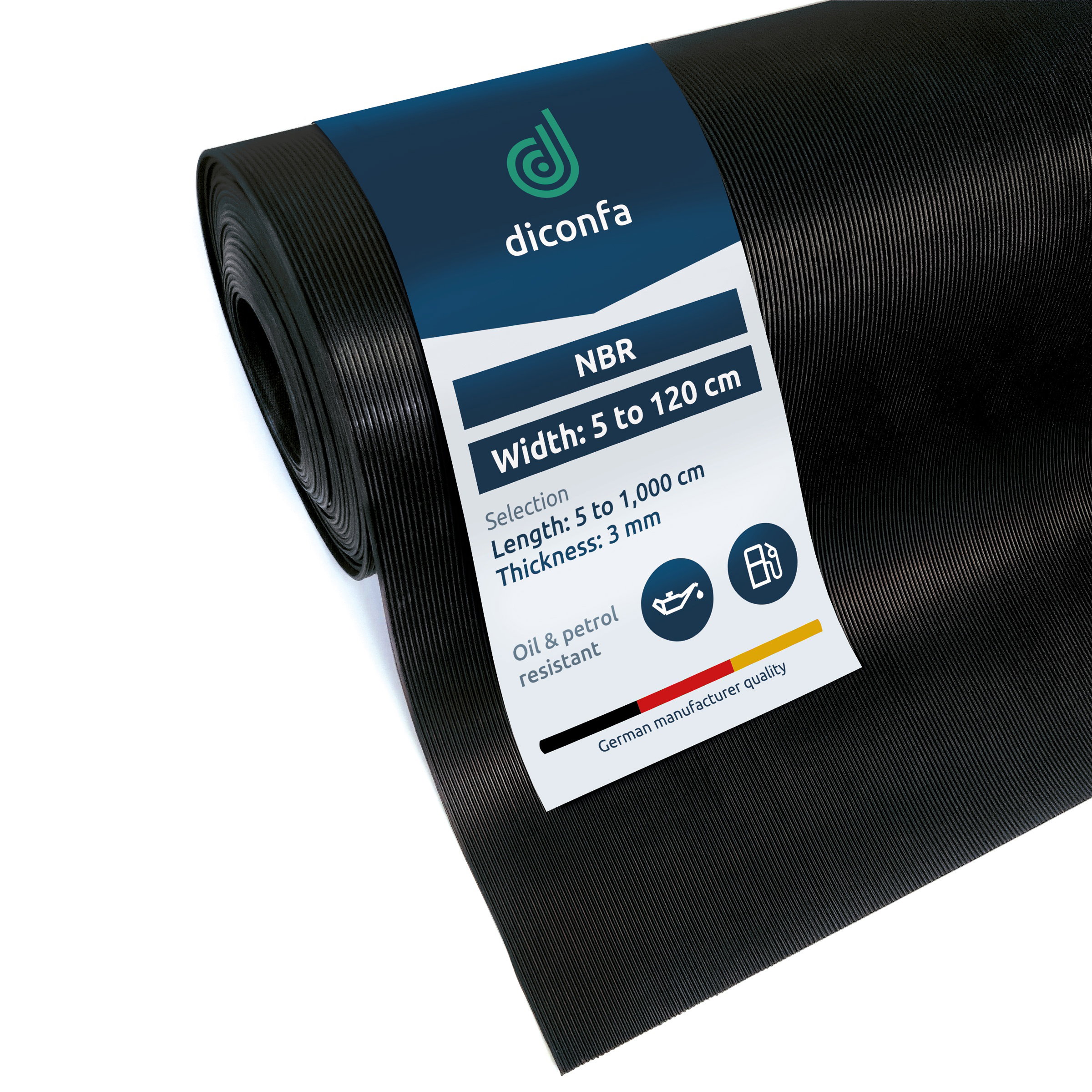
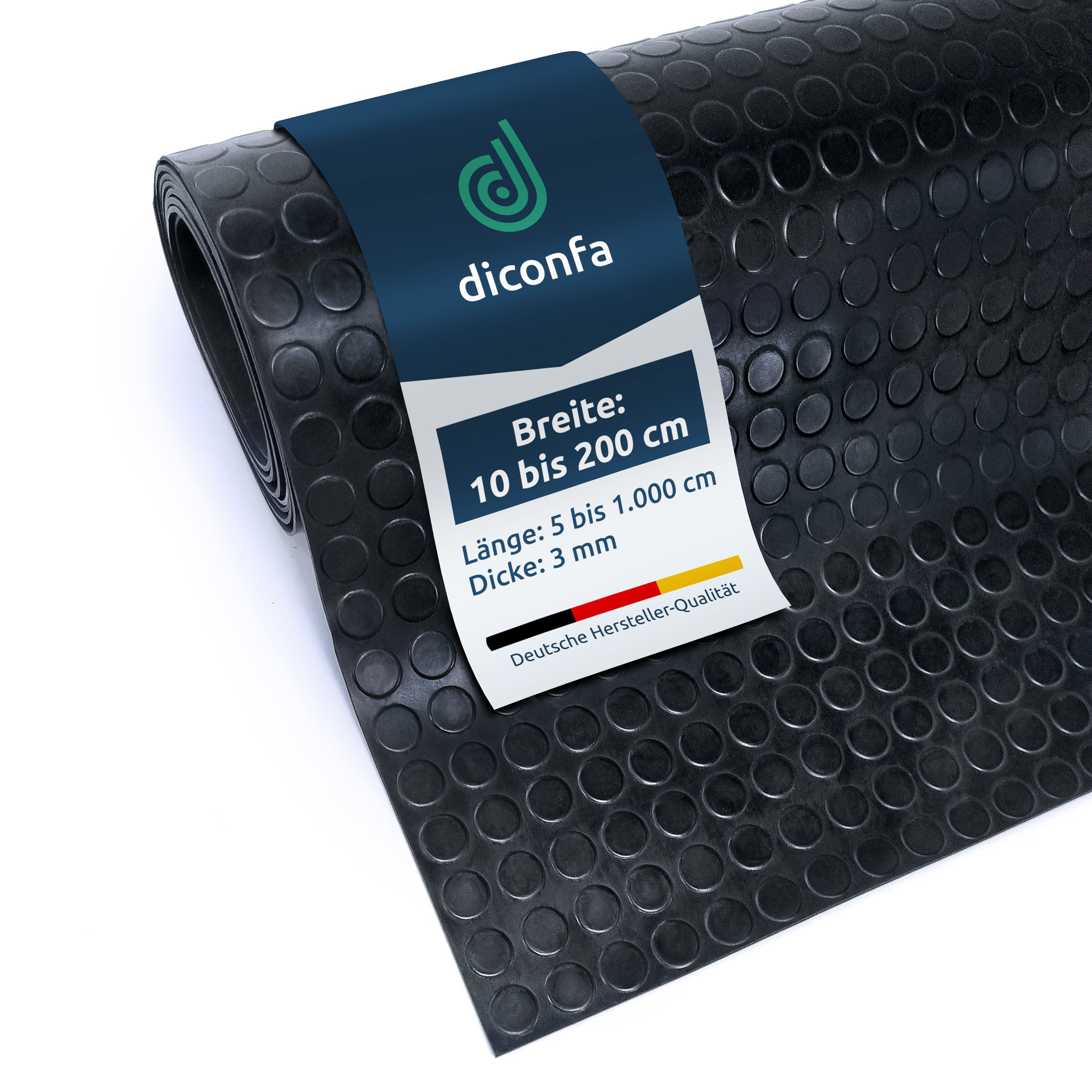
Depending on the application, profiled anti-slip mats or other structured rubber runners can also be used. They are used, for example, in workshops, work areas or on ramps where additional grip and a robust surface are required.
However, not every profiled mat is automatically suitable for large amounts of water or permanently wet areas. When making a selection, the intended use and the specific product data should therefore always be taken into account.
Typical Areas with Slip Risk Caused by Moisture
Depending on their respective design, slip-resistant mats can be used, among other things, in the following areas:
- house entrances and company entrances
- transitions between indoor and outdoor areas
- walkways and access routes
- outdoor stairs and landings
- terraces and balconies
- workshops and work areas
- warehouse and business entrances
- covered outdoor areas
- hospitality and event areas
- other surfaces regularly exposed to moisture
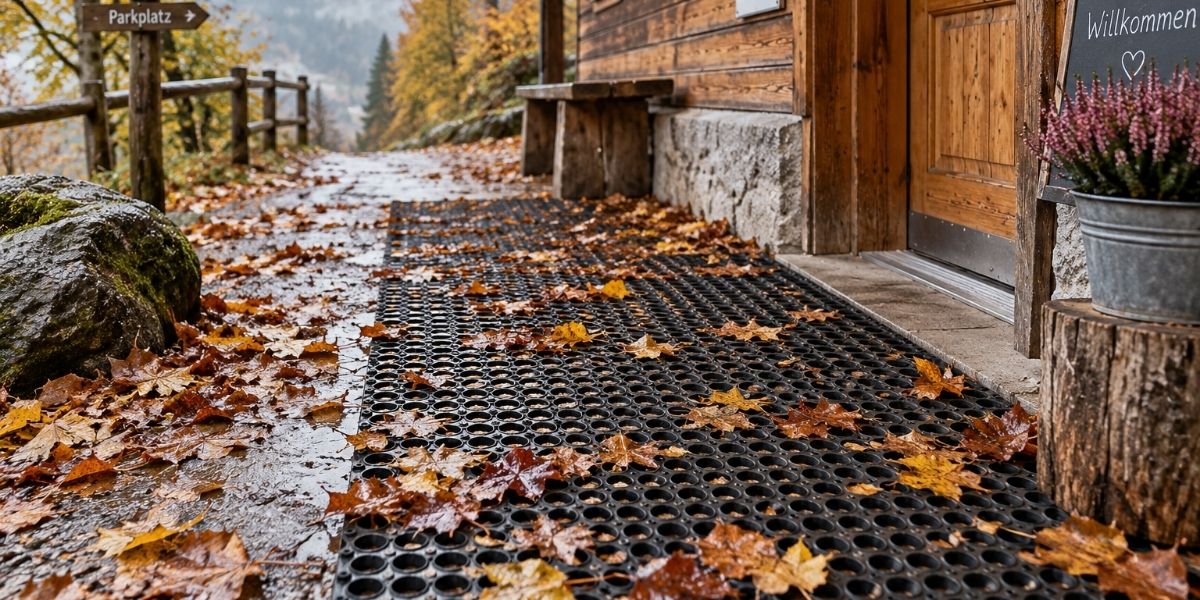
Consider Wet Leaves and Autumn Weather
In autumn, slip hazards often result from a combination of rain, moisture and leaves. Wet leaves can form an additional slippery layer on paved paths, stairs and entrance areas. Slip-resistant mats can create a grippier walking surface in these areas, but they do not replace regular cleaning of the surface.
Leaves, mud and other coarse dirt should therefore be removed regularly from the mat and the surrounding area. With open ring and perforated structures, it should also be checked that the openings do not remain permanently blocked and that water can continue to drain away.
What Matters When Choosing Mats for Wet Areas?
Surface Structure and Slip Resistance
A structured or particularly grippy surface helps provide better footing in damp walking areas. Depending on the product, different profiles, granulate surfaces or open ring structures are used.
Drain or Let Water Pass Through
If larger amounts of water occur regularly, a water-permeable or open mat construction can be useful. Water should not only be able to pass through the mat, but should also be able to drain away sufficiently on the substrate below.
Substrate and Secure Positioning
The mat itself should lie securely on the existing substrate. Uneven surfaces, steep gradients or unsuitable substrates can cause a floor mat to slip or become a trip hazard. If necessary, a suitable fixing method should therefore be considered.
Outdoor Use
For outdoor areas used on a permanent basis, the selected mat should be suitable for the weather conditions that occur there. Information on UV and weather resistance, temperature range and material can be found on the respective product pages.
Custom Rubber Mats for Entrances and Walkways
Entrances, stair landings and walkways often do not match the dimensions of standard mats. Many suitable mats from diconfa can therefore be configured individually in width and length.
A suitable cut makes it easier to integrate the mat into existing areas and reduces unnecessary material waste or additional cutting work on site. The available sizes and versions depend on the respective product.
Autumn Moisture or Ice and Snow in Winter?
Rain and moisture place different demands on a mat than severe winter conditions. This page therefore focuses on slip hazards caused by wet conditions, rain, splash water and damp walking areas.
For areas where snow, slush, frost and icy conditions are the main issue, you can find suitable information on the page Rubber Mats Against Slippery Conditions Caused by Ice & Snow. Further solutions for terraces, gardens, paths and other outdoor areas can also be found under Rubber Mats for Outdoor Areas.
Lorem Ipsum dolor
Lorem ipsum dolor sit amet, consetetur sadipscing elitr, sed diam nonumy eirmod tempor invidunt ut labore et dolore magna aliquyam erat, sed diam voluptua. At vero eos et accusam et justo duo dolores et ea rebum.
Lorem Ipsum dolor
Lorem ipsum dolor sit amet, consetetur sadipscing elitr, sed diam nonumy eirmod tempor invidunt ut labore et dolore magna aliquyam erat, sed diam voluptua. At vero eos et accusam et justo duo dolores et ea rebum.
Lorem Ipsum dolor
Lorem ipsum dolor sit amet, consetetur sadipscing elitr, sed diam nonumy eirmod tempor invidunt ut labore et dolore magna aliquyam erat, sed diam voluptua. At vero eos et accusam et justo duo dolores et ea rebum.
Frequently Asked Questions
Mats with a slip-resistant surface are particularly suitable. If larger amounts of water occur regularly, open or water-permeable versions such as ring rubber mats or suitable safety mats can be a good choice.
Ring rubber mats have an open structure that allows water and dirt to pass through to the surface below. As a result, less liquid remains directly on the walking surface. A suitable drainage system beneath the mat is essential.
Suitable mats can also be used on outdoor stairs. A precise fit, secure positioning and, where necessary, suitable fastening are particularly important.

Thank you for subscribing!
You have just subscribed to our newsletter. To complete the registration, check your email inbox for our confirmation mail and click the link inside.
Stay up to date and get 5% off*!
Receive regular insights into new products, practical and new features, and technical developments. Benefit from real innovations and quality – Made by diconfa.
No spam – only relevant updates.
No spam – only relevant updates. Unsubscribe anytime.
*By signing up for the newsletter, you will receive 5% off your next purchase at diconfa.de after confirming your subscription.