1 Product
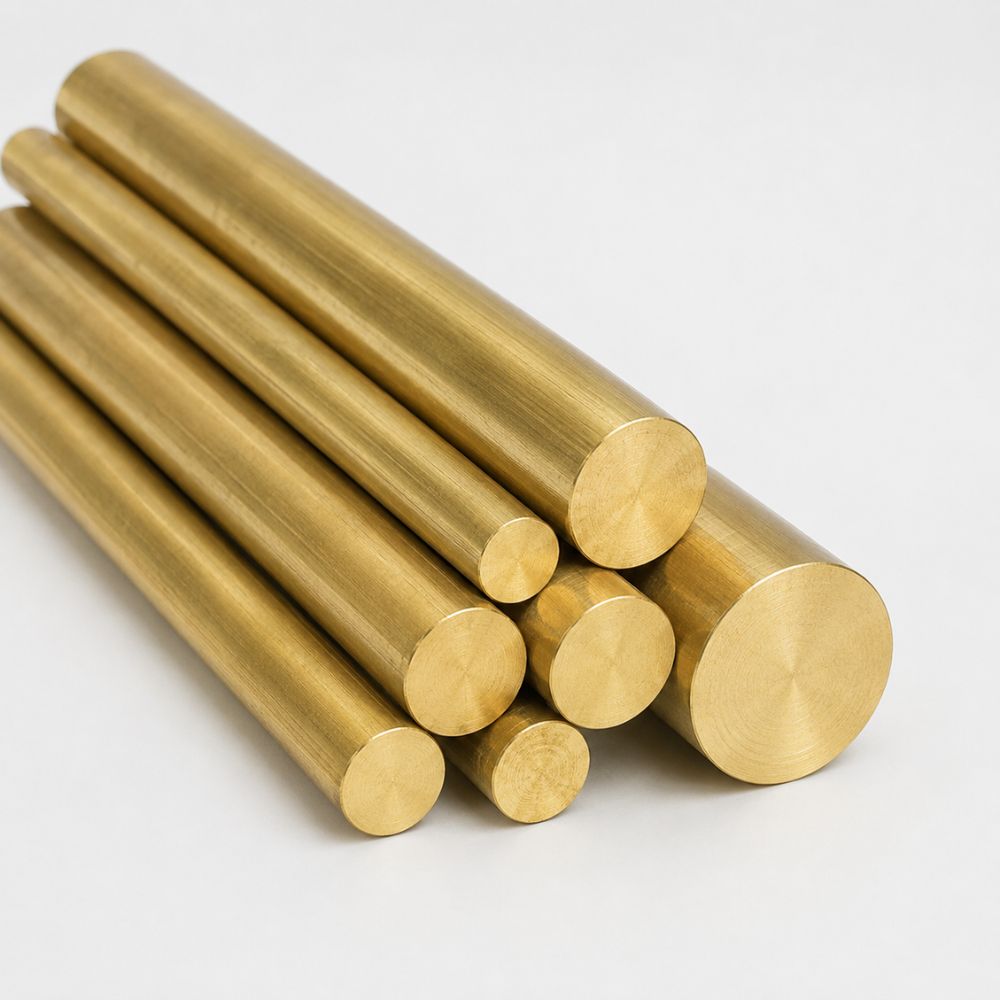
CW614N Brass Round Bar cut to size
Brass Round Bar | CW614N Ms58 | Bright Drawn, h9 Tolerance, Non-Magnetic | Ø 6–50 mm
From
€2.68
€53.60/m
Custom shape or drawing part?
Customized solutions tailored to your requirements – fast, precise, and reliable. Upload your drawing as DXF or PDF and we will prepare your quote.
Request a quote
Secure payment methods
Fast delivery time
Order directly from stock
Purchase on invoice
Frequently Asked Questions
A brass round bar is a solid semi-finished metal product made from a brass alloy with a circular cross-section. It is commonly used as a starting material for the manufacture and machining of technical components.
Brass round bars are used, among other applications, in mechanical engineering, toolmaking, metal construction, automotive applications, model making, fittings and decorative applications.
diconfa currently offers round bars made from CW614N. This material is also known as Ms58 or CuZn39Pb3.
CW614N ist eine genormte Werkstoffbezeichnung für eine bestimmte Messinglegierung. Der aktuell angebotene Rundstab entspricht der Zusammensetzung CuZn39Pb3 und wird auch als Ms58 bezeichnet.
Yes. The CW614N round bar offered by diconfa is characterised by very good machinability and can be turned, drilled, milled, ground and sawn, among other machining processes.
h9 refers to the tolerance class of the diameter. The current CW614N round bar from diconfa is offered with this defined diameter tolerance.
The CW614N brass round bar currently offered by diconfa is specified as non-magnetic. This statement refers to the specific product version.
Yes. The CW614N round bar can be ordered from diconfa in various diameters and individually selected lengths.
Typische Beispiele sind Buchsen, Bolzen, Hülsen, Abstandshalter, Achsen, Gewindeteile, Beschläge und verschiedene Dreh- oder Frästeile.
Both have a solid, round cross-section, but they are made from different materials. Round steel is made from steel, while brass round bars are made from a copper-zinc alloy. As a result, they differ in their properties, machinability and possible applications.