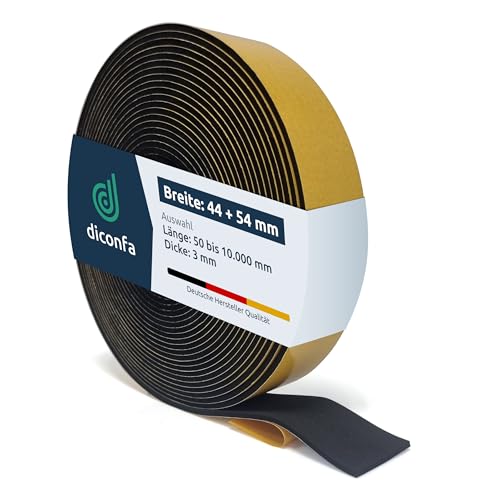
Selecting the Width and Thickness of the Sealing Tape
For a sealing tape to function reliably, its dimensions must match the sealing surface and the existing gap. In particular, width and thickness must be considered separately.
Determining the Right Width
The width depends on the available contact or adhesive surface. The sealing tape should rest fully on the component without protruding undesirably beyond edges, openings or moving elements.
Before ordering, the available surface should be measured at several points. This is particularly useful for older components, as dimensions may vary due to wear or deformation.
Determining the Right Thickness
The thickness of the sealing tape depends on the gap to be sealed and the required compression. When the connection is closed, the tape should be compressed sufficiently without being completely crushed or permanently overloaded.
If the tape is too thin, the material may not reach the opposite surface sufficiently. If the tape is too thick, however, it can make it more difficult to close windows, doors or flaps and may place excessive stress on the seal.
There is no universally applicable compression ratio for all sealing tapes. The material properties and the recommendations for the respective product are decisive.
Sealing Tape, Rubber Strip or Sealing Profile?
The terms sealing tape, rubber strip and sealing profile are sometimes used in a similar way, but they describe different product forms.
Sealing Tapes
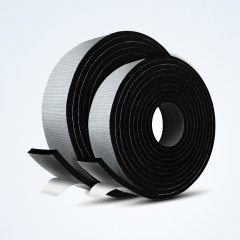
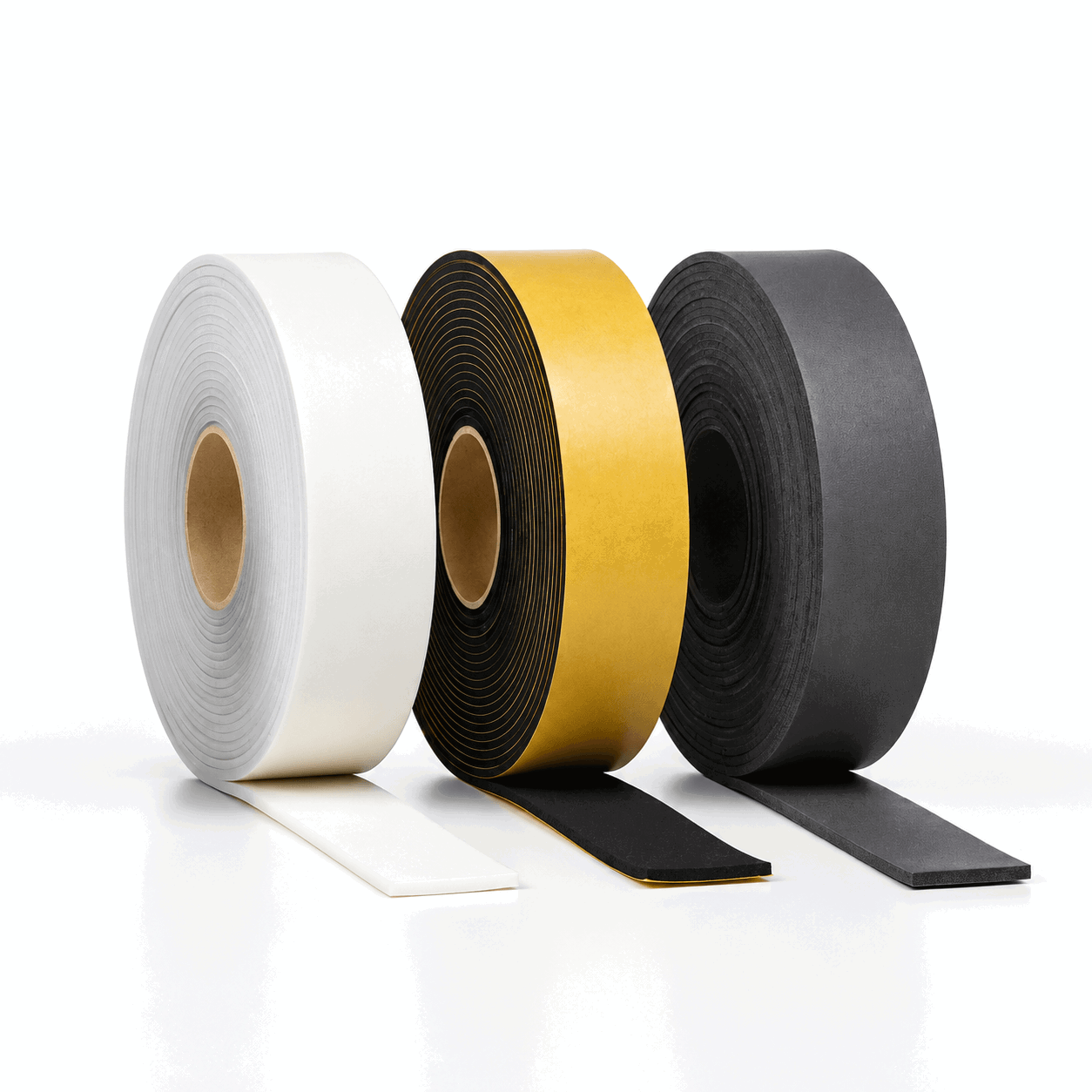
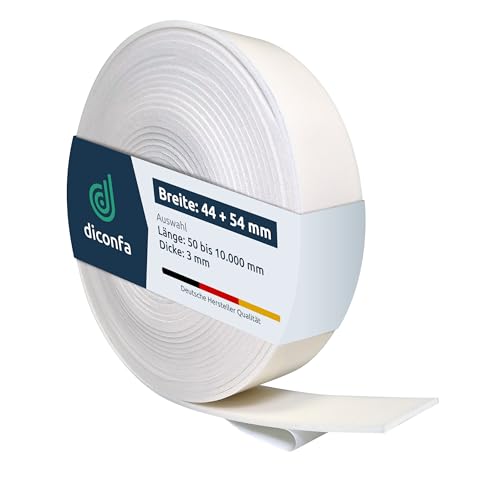
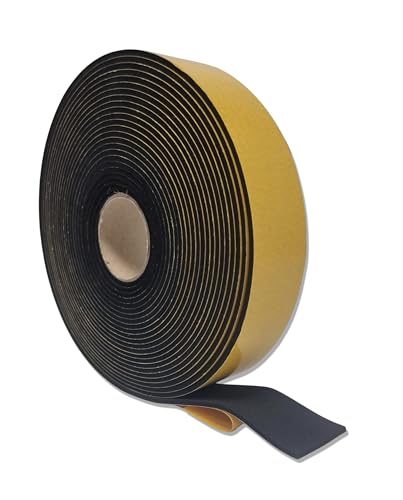
Sealing tapes are usually relatively soft and compressible. They are often offered with a self-adhesive backing and are particularly suitable for sealing elongated joints, gaps and component transitions.
Rubber Strips
Rubber strips are usually made from more compact solid rubber. They are less compressible than foam or cellular rubber tapes and are used, for example, as underlays, protective strips, spacers or robust seals.
You can find suitable versions in the category self-adhesive rubber strips.
Sealing Profiles
Sealing profiles have a defined cross-section, for example as round cord, insert profiles or specially shaped edge seals. They are often installed in a groove, guide channel or along a specific component edge.
You can find suitable profile shapes in the sealing profiles section.
Sealing Tapes and Foam Seals
The term sealing tape primarily describes the narrow, tape-shaped product form. The term foam seal refers more specifically to the material and its structure.
A self-adhesive cellular rubber tape can therefore be both a sealing tape and a foam seal. Further full-surface, cut-to-size or specially designed versions for windows and technical components can be found in the category foam seals.
Advantages of Self-Adhesive Sealing Tapes
Self-adhesive sealing tapes allow quick installation and can be used for a wide range of sealing, insulation and decoupling tasks.
Depending on the material and design, they offer, among other things:
- simple and clean installation
- flexible lengths and custom cuts
- a choice of different widths and thicknesses
- adaptation to minor irregularities
- reduction of draughts, dust and noise
- damping of vibrations and rattling noises
- thermal and acoustic decoupling
- materials for indoor and outdoor applications
- solutions for repairs and new constructions
The properties actually achieved depend on the specific product and correct installation.
Order Custom Sealing Tapes from diconfa
At diconfa, you can find self-adhesive sealing tapes for windows, doors, roof windows, equipment and numerous technical applications. Depending on the product, width, thickness and length can be selected to suit the installation situation.
Benefit from:
- self-adhesive sealing tapes
- different foam and cellular rubber qualities
- various widths and material thicknesses
- individually selectable lengths
- sealing tapes for indoor and outdoor applications
- solutions for windows, doors and technical components
- custom cuts for individual requirements and larger quantities
- personal advice for special requirements
Select the right sealing tape based on material, width, thickness, length and intended application. Further sealing solutions can be found in the categories foam seals, sealing profiles and in our parent category seals.